Spider
Lifts Unlocked:
Engineering the Narrow-Access Solution
Analyzing Ground Pressure (psf),
Bi-Energy Duty Cycles, and the Logic of Precision Remote Control.
Modern architecture—characterized by soaring glass
atriums, delicate marble flooring, and tight interior apertures—presents a unique “Access Paradox.” Standard
scissor or boom lifts provide the reach but lack the Ground Pressure (psf) sensitivity and
Width Profile to enter the workspace.
The engineering answer is the Spider Lift
(officially the **Compact Crawler Boom**). By decoupling machine weight from localized wheel contact and
utilizing multi-position outriggers, spider lifts operate in environments that were previously the domain of
expensive, static scaffolding. This guide audited the technical sub-systems that define a professional-grade
crawler boom.
📑 Specialized Access Index
1. Ground Pressure Physics: Protecting High-Value Flooring
The defining technical spec of a spider lift is not height, but its Point Loading. By utilizing
expandable rubber tracks, the machine’s center of gravity is distributed over a vast footprint compared to the four
small contact points of a wheeled lift.
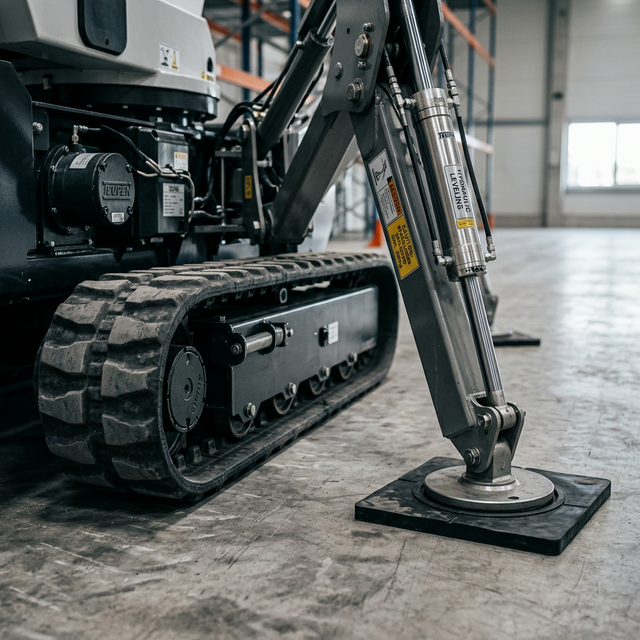
Integrity: Professional units utilize White Non-Marking tracks to ensure zero carbon scuffs on gym floors or
commercial marble.
For facility managers, the **psf (Pounds per Square Foot)** calculation is the go/no-go metric. A standard 20m spider
lift typically exerts less ground pressure than a person walking—making it safe for raised access floors and
historical tiles.
2. Bi-Energy Powertrains: Silent Operation & Outdoor Power
The “Expert” class of spider lifts features **Bi-Energy Systems**. This typically combines a high-efficiency **AC
Electric Motor** (230V plugin or Lithium batteries) with a **Kubota/Yanmar Diesel engine**.
- Indoor Mode: Zero-emissions, near-silent operation for hotels or shopping malls during business
hours. - Outdoor Mode: High-torque diesel combustion for traversing steep gradients or working on
landscaping projects.
3. The Logic of Remote Control: RRC vs. On-Platform Systems
In narrow scenarios, visibility is everything. Top Manufacturers (like specialized Italian or Chinese OEMS)
prioritize **Radio Remote Control (RRC)**. This allow the operator to stand outside the machine while
tracking it through a 0.8m wide doorway—eliminating “blind-spot” collisions with high-value door frames.
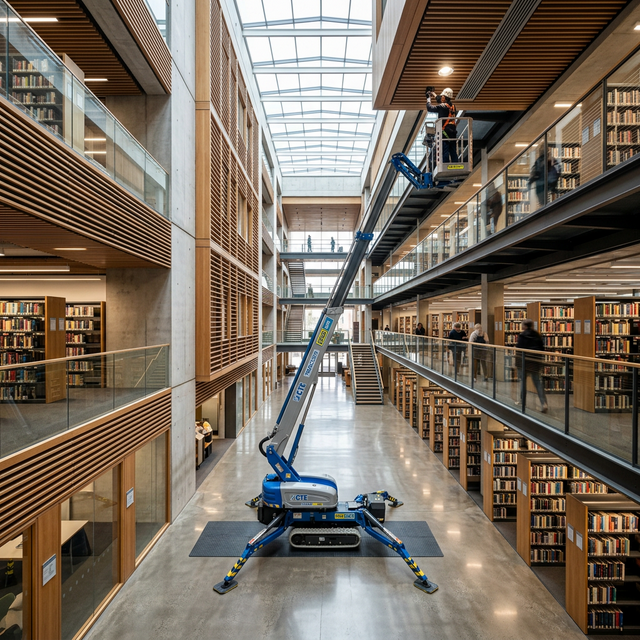
Navigation: The combination of zero tailswing and a 780mm stowed width allows the spider lift to reach atriums
that were previously ‘un-liftable’.
4. Procurement Strategy: High-Margin Rental Utilization
For B2B distributors, the **Spider Lift** is a “high-margin / low-volume” play. Because they solve problems that no
other machine can, rental rates for spider lifts are often 2x to 3x higher than standard boom lifts of the same
height.
Technical Access Consulting by 陈船长独立站
We help specialized machinery brands
build technical authority through high-performance content. Don’t sell just a lift—sell an access solution
backed by data.
Related Technical Manuals: