The Technical Architecture of Aerial Work Platforms: A B2B Strategic Manual
Beyond the lift: Analyzing Hydraulic
Precision, PLC Logic, and the ROI of Modern MEWP Fleets.
In the B2B industrial sector, an Aerial Work
Platform (AWP)—officially MEWP—is not merely a piece of hardware; it is a
high-utilization asset whose profitability is dictated by its technical uptime and engineering integrity. While
basic guides focus on ‘height’, this manual dives into the Component-Level Architecture and
Business ROI Modeling that separates global industry leaders from generic alternatives.
Whether you are a fleet owner managing 1,000 units or a
sourcing manager vetting a new OEM partner in China, understanding the ‘Guts’ of the machine—from
Hall-effect proportional controls to LiFePO4 battery duty cycles—is critical
for risk mitigation and profit maximization.
📑 Engineering & Strategy Index
1. The Mechanical Infrastructure: Hydraulics & Chassis Dynamics
The core of any MEWP is its Hydraulic Circuitry. Expert buyers distinguish quality not by the paint,
but by the Hydraulic Manifold design. Professional-grade machines utilize integrated valve blocks
with Secondary Burst Protection and zero-leakage high-pressure seals.
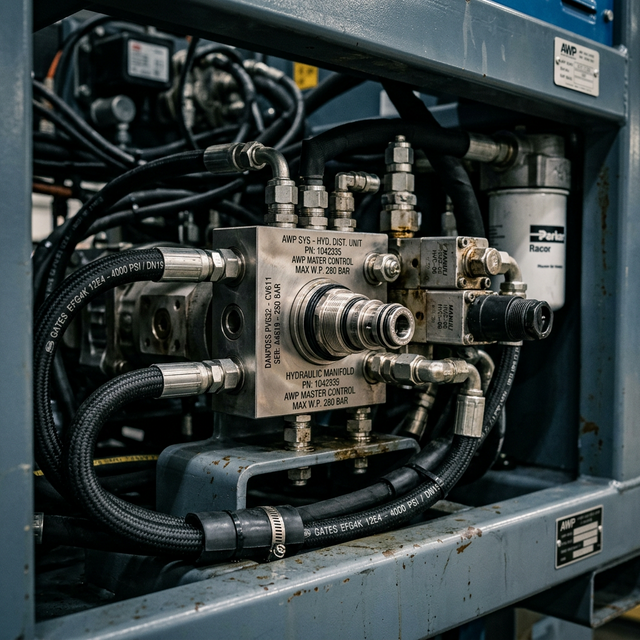
Focus: A premium integrated hydraulic manifold allows for smoother proportional movement and significantly
reduces potential leak points compared to traditional hose-intensive cabling.
For Rough Terrain (RT) models, chassis dynamics move into **Class 3** territory. Key features like
**Oscillating Axles** allow the wheels to maintain ground contact on uneven jobsites, maintaining a stable center of
gravity even with a 40-meter boom extended. Gradeability is not just a marketing number—it’s a function of
High-Torque Hydraulic Drive Motors and axle-locking differentials.
🛠️ Technical Recaps: Mechanical
Guts
- Manifolds: Integrated blocks reduce pressure drop and heat generation.
- Cylinders: Double-acting with emergency descent manual override valves.
- Tires: Non-marking solid rubber for finished floors; foam-filled tracks for RT
environments. - The Trade-off: High-precision hydraulics require strict ISO 4406 oil
cleanliness standards; neglect leads to catastrophic valve failure.
2. Electrical Intelligence: PLC Logic and Proportional Controls
Modern access equipment is “Smart” by necessity. The transition from simple relay-based switches to PLC
(Programmable Logic Controllers) has enabled the implementation of complex safety envelops. These
controllers process input from **Tilt Sensors**, **Load Sensing Cells**, and **Proximity Sensors** 100 times per
second.
The “User Experience” for an operator is governed by the Hall-Effect Joysticks. Unlike contact-based
potentiometers, Hall-effect sensors use magnets to detect position, eliminating mechanical wear and providing
stepless, Proportional Control. This is critical when positioning a 1,000lb platform within centimeters of
an aircraft fuselage.
3. The Energy Evolution: Analyzing the Shift to Lithium (LiFePO4)
For rental fleet owners, the battery is the highest-maintenance component. The industry standard has shifted from
Lead-Acid to Lithium Iron Phosphate (LiFePO4) for three business-critical reasons:
- Cycle Life: 2,500+ cycles vs. 500 cycles for lead-acid (effectively a 5x equipment life
improvement). - Opportunity Charging: Charging during a 30-minute lunch break without “memory effect” damaging
the cells. - Weight Efficiency: Up to 50% lighter, allowing for higher platform capacities on the same
chassis.
Leading Chinese brands like **Dingli** and **Sinoboom** now offer 80V high-voltage systems that allow heavy-duty RT
Booms to match diesel performance while operating silently and with zero emissions.
4. The Business Logic: TCO, Utilization, and Resale Strategy
How do we measure a “good” AWP investment? The formula is data-driven:
ROI = (Rental Income × Utilization Rate) – Total Cost of Ownership (TCO)
Total Cost of Ownership (TCO) includes acquisition, maintenance (filters/oil/tires), energy costs,
and—crucially—Residual Value. Five years ago, Chinese brands suffered from low resale value; today,
with global parts centers and proven reliability, top-tier Chinese AEWP manufacturers are hitting 65-70% residual
value after 5 years, rivaling JLG/Genie.
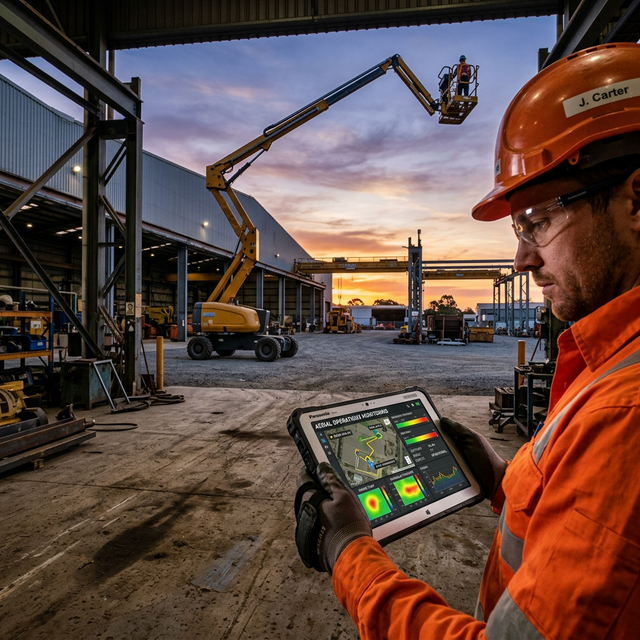
Intelligence: Telematics systems (GPS + Remote Diagnostics) can reduce onsite service calls by 30% through
remote troubleshooting, directly impacting the TCO.
Strategic Sourcing with 陈船长独立站
We provide technical
B2B content strategy that bridges the gap between complex engineering and international procurement demands. We
help industrial brands dominate the high-value AWP market through authoritative digital assets.
5. Global Compliance: ANSI, CE, and AS/NZS Decoded
Finally, no technical guide is complete without a compliance breakdown. ANSI A92.20 is the
“Gatekeeper” of the North American market, requiring mandatory load sensing and active platform height limiters. In
Europe, CE EN280 governs the design safety. For B2B buyers, certificates are not just paper—they
are proof of a manufacturer’s Structural Integrity R&D. Always request the full Type
Examination Certificate before committing to an OEM partnership.
Related Professional Resources: